

Cheetahs in Masai Mara
Cheetahs in Masai Mara
Cheetah in Masai Mara: Cheetahs, scientifically called Acinonyx jubatus are almost looking like Leopards though they are not as muscular as them. The tear line running from the eyes to the mouth makes them different from each other. Cheetahs are built for sheer speed, making them the fastest land mammal on the planet Earth with an estimated speed of 110 kilometers per hour.
Cheetahs give birth to Cubs between 1 and 6 after a gestation period of 3 months. It’s very rare for all the cubs to grow to maturity due to many factors that cause them to succumb, like poor health, predators, and many others, hence negatively affecting the increase of the population despite the fact that they produce more cubs.
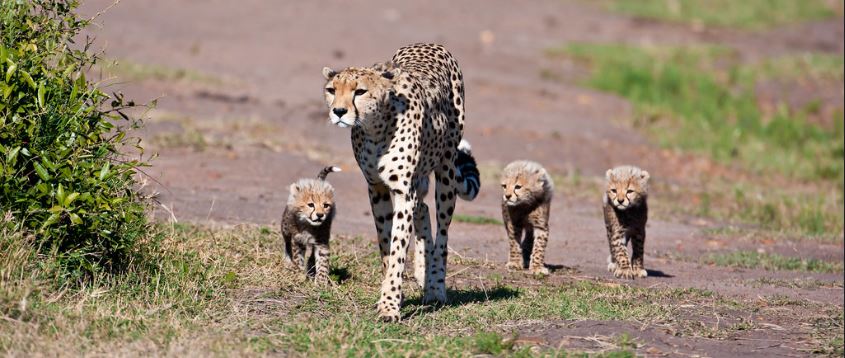
Masai Mara National Reserve is one of the destinations where one can easily spot cheetahs, as their population is high; they can be easily spotted when they are high on termites mould, small raised rocks, and car bonnets as they position themselves high for easy sighting of the prey.
Their speed gives them an added advantage to ambush and catch the prey, though it’s also a disadvantage to them in that after killing they have to rest for more than 20 minutes before starting to feed on the prey, giving advantages to hyenas, jackals and other small predators who can easily scare and chase them away as they are very fearful.
The population of cheetahs keeps reducing in Africa, with the current number being around 7000 cheetahs, not even half of the population 30 years back, with so many factors contributing to the population drop rapidly, like illegal trade in animals, human conflicts with wildlife for land, and many more factors.
Cheetahs, especially the males, live in groups to ease their chances of hunting and also have good territory protection; Cheetahs demarcate their territories with urine, faeces, and sometimes claw-raking. Thanks to the Masai Mara Meru Cheetah project, which is trying to protect and sensitize the locals on the ways of living together with the cheetahs at peace and advocating for sustainable tourism by making tourists themselves responsible for the conservation of the wildlife through following the reserve regulations well.