
Animals to see in Masai Mara
Animals to see in Masai Mara Kenya.
Animals to see in Masai Mara, the Masai Mara National Reserve is undoubtedly the most notable and revered in Kenya, its sheer size extending to and eventually joining Tanzania’s Serengeti National Park. The reserve is located in the Great Rift Valley, and together with the Serengeti, they form the oldest ecosystem on earth, hosting the annual Great Wildebeest Migration.
Masai Mara National Reserve is home to more than 95 animal species. The best time to visit the reserve is from mid-July to mid-October, as this is when the Great Wildebeest Migration of millions of wildebeests and thousands of zebras and gazelles occurs.
By mid-July, they normally start crossing over from the Tanzanian Serengeti. The annual migration involves over 2.5 million animals; together, they cross the dangerous Mara River in massive herds in order to find nutritious grass on the other side.
Below are some of the animals to see in the Masai Mara
Lions
Masai Mara National Reserve is worldly known for hosting the largest pride of lions in the world. The Mara Predator Project was started to save these remarkable lions in various conservancies and the reserve itself, while also creating a database for lion identification. The Cheli and Peacock pride and the Enesikiria pride are the two largest prides in the reserve.
Even though lions rule the jungle, they are particularly vulnerable when the cubs are still young and their competitors, other predators like cheetahs, hyenas, and leopards, prey on them. Male lions kill the young cubs not only to get the lioness back into heat faster for mating, but also because this practice contributes to limiting the lion population.
Cheetahs
Cheetahs are the world’s fastest animals and the easiest big cat to catch; they can even be kept as pets. Masai Mara National Reserve is home to a healthy cheetah population, which is easy to observe while on a game drive around the reserve’s endless plains.
Cheetahs are so friendly that they can even get inside your safari vehicle.
While they resemble leopards from a distance, cheetahs differ from leopards in having a less muscular, ripping line extending from their eyes to their loins. The abundant vegetation in the Masai Mara National Reserve makes it easy for visitors to see cheetahs perched atop termite hills or atop elevated rocks surrounding the reserve.
Leopards
These solitary cats are the smallest of all the African Big 5, but the deadliest and most muscular animals. It is quite uncommon to see leopards while on a safari in the Masai Mara National Reserve.
Leopards can easily be identified by our specialized tour guides on a game safari in the Masai Mara National Reserve; these guides are aware of the other traits and behaviors of the surrounding area when a leopard is about.
Leopards prefer to live in a quiet, remote place where they can easily obtain food and spend most of their time perched on trees.
Masai Mara National Reserve has a healthy population, so a section of the reserve is known as Leopard Gorge. Leopards are well-known for their peculiar ability to carry their prey, occasionally tripling their weight, up into the tree.
Elephants
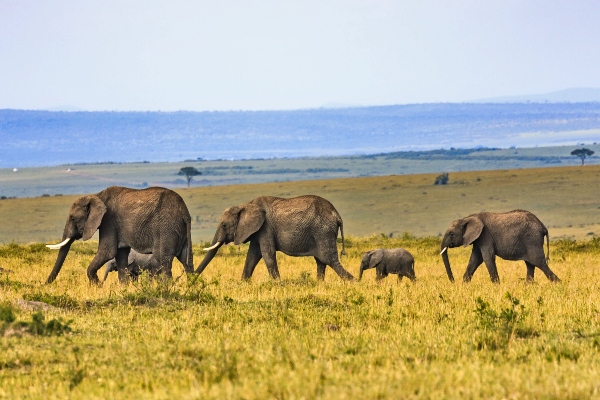
Elephants—one of the members of the Big Five are the largest animals on earth. Masai Mara National Reserve is home to a large concentration of elephants, with more than 30,000 elephant individuals recorded in the reserve in 2015 by the Elephant Population Project.
Masai Mara is known to be the only place where elephant populations are increasing quickly; this is a result of the government of Kenya and the Maasai Community working together to combat poaching in the country.
Elephants are extremely basic animals that might be hazardous if they charge. You can see them most of the time on a Masai Mara Safari. They are gentle, and they primarily rely on their trunks for tasks like eating, drinking, fighting, gripping objects, and many other things.
Black Rhino
The endangered black rhinos are among the rarest of all the African Big 5 in the Masai Mara. A few years ago, the reserve rarely sighted rhinos, but recently they have become a common sight. Because of the high rate of poaching that has hampered the growth of their number, shy rhinos avoid close contact with other animals for their own safety. The desire for rhino horns in Asian Nations like China and Thailand, among others, led to a rise in poaching in Africa.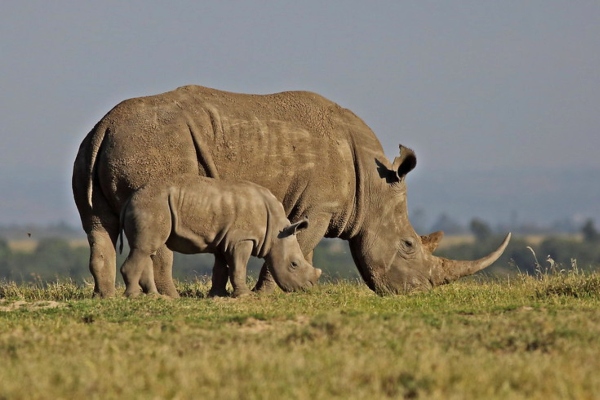
Wildebeests
Wildebeests are one of the most famous wildlife species in Africa, as well as the Masai Mara National Reserve. Also known as the Gnus, wildebeests are part of the antelope family. They are quite big in size and resemble the cows more. Although few wildebeests remain because most are migratory, those in the Masai Mara are permanent residents.
The Great Migration, the world’s largest on-land wildlife migration, is led by the wildebeest, with more than 2 million wildebeest taking part in this annual journey in search of water and green pasture.
Every year, from July to October, the wildebeest migration takes place. These are the best months to visit the Masai Mara National Reserve, especially if you want to see these animals in action.
In addition to the above-listed wildlife species, the Masai Mara National Reserve hosts other wildlife species, including baboons, jackals, hyenas, hippos, giraffes, and many more species.