

Why Are Kenya Safaris Expensive?
Why Are Kenya Safaris Expensive?
Why Are Kenya Safaris Expensive? A safari to Kenya is on top of the bucket list for most travelers from all over the world, offering some of the most thrilling and unforgettable experiences that will last forever. From scenic landscapes to pristine beaches on the coast of the Indian Ocean.
Why are Kenya safaris expensive? Is a frequently asked question by travelers planning a safari to Kenya. The cost of a Kenya safari is very essential when planning your safari and this is influenced by several factors, including the duration of your Kenya Safari, the type of accommodation and the safari activities you intend to do.
In this blog, we explore several factors that make Kenya safaris expensive.
Reasons (Factors) to Why Kenya Safaris are Expensive
- Distance and Infrastructure
Unlike traveling in developed countries like China, USA and Europe, where it is inexpensive due to the extensive infrastructures like airports, highways, railway lines and hotels, traveling in Kenya is quite expensive. In developed countries there are numerous companies offering services, resulting in a competitive market. These regions are also popular tourist destinations, leading to economies of scale.
In Kenya, outside of the capital cities, there are no airports except for airstrips, which can only accommodate a limited number of guests arriving and departing at a time. There are no larger jet fuel tankers at these airstrips for easy refueling, and every drop of fuel must be transported at a considerable cost. The roads may be dirt and easily washed away during heavy seasonal rains or floods.
Unlike developed countries, infrastructure in Kenya is limited, and there are no buses, trains or low-cost carriers traveling between different locations regularly. Instead, private operators provide transportation, including road transfers, charter flights and day tours.
- National Park Entry Fees
When visiting Kenya’s national parks, game reserves and conservancies, you are required to pay a conservation fee (park entry fees) for every day spent inside these protected areas. The fee is used to fund the extensive management of the areas and protect the areas, which is crucial for preserving the land and wildlife.
The cost of conservation fees is usually included in the total cost of your safari package, and the funds collected are transferred to national parks, private game reserves and indigenous landowners—for the conservancies.
By paying these entry fees, you are directly contributing towards wildlife conservation and providing a tangible incentive for local communities to help protect Kenya wilderness and ecosystems. Although these fees may make a Kenya safari seem expensive, they are necessary to ensure the sustainability of the land and protection of the wildlife.
- Remote Locations
Most of the safari lodges and camps in Kenya are situated very far away from any major cities or towns. This means that camps and lodges have to be self-sufficient, in that every item you use, from food items to soap, has been transported across thousands of kilometers of poor roads and taken on ferries across rivers and lakes. It can take up to two days to drive the supplies to the camp, even though it can take about two hours to fly there.
Flying supplies in is even more expensive.
In Kenya national parks and reserves, there are no stores where you can buy essentials. The nearest shop might be more than 200 kilometers away along a seldom-used road. This makes it necessary to plan logistics very carefully to keep the safari lodge or camp running smoothly, as it is quite isolated. As a result, the operational costs are very high, which is why Kenya safaris are expensive.
- All-Inclusive Rates – Accommodation
During your Kenya safari planning process, you might come across the term “all-inclusive,” meaning that you pay a fixed daily rate per person that includes your accommodations, meals, snacks and standard drinks, as well as safari experiences like game viewing and hot air ballooning.
Although it may seem expensive at first, an all-inclusive Kenya safari offers value for money.
When you go on a Kenya Safari, you are likely to be in a remote location, meaning that your safari camp or safari lodge has to provide almost everything. Unlike hotels, there are no restaurants to order meals from or supermarkets to buy snacks and drinks. This is why the cost of accommodation on a safari in Kenya can seem high, especially when compared to a hotel stay that only includes breakfast.
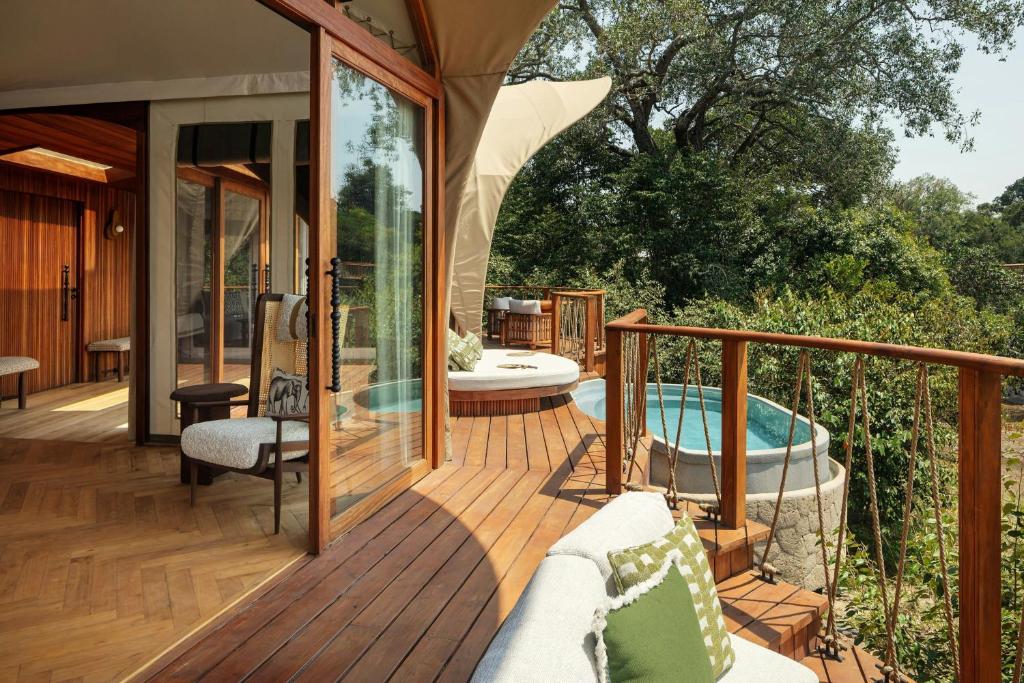
However, it is very important to note that the initial cost of an all-inclusive safari covers more services and experiences than just accommodation. When you stay at a safari lodge, you don’t have to worry about finding where to eat or things to do, as everything is taken care of by your tour operator.
An all-inclusive Kenya Safari includes meals, snacks, drinks, and game viewing activities and experiences. This means you will not have to spend as much during your stay. This makes all-inclusive safaris a great value for money and offers a worry-free way to experience the beauty and excitement of a Kenya Safari.
The above listed factors answer the question, “Why are Kenya Safaris Expensive?