

Horseback safaris in Kenya
Horseback safaris in Kenya : The African horse safari originated in Kenya, an East African nation that offers the best opportunities for riding safaris. The main draw of a horseback riding safari in Kenya is the chance to ride through some of the country’s most amazing animal spectacles, such the famous wildebeest migration. Imagine galloping next to enormous herds of zebra and wildebeest as they move from Tanzania’s Serengeti to the Masai Mara.
The high region of Laikipia’s hard rocky outcrops is another option besides the Mara. For the ultimate safari vacation, you might combine the two. Seeing all of this on the back of a horse is one of the most amazing things to experience in the wild, even though most people equate Kenya with the gorgeous animals and jeep safaris. There is only you, the environment, and your horse. Safaris on horses are exciting and luxury safari in Kenya. There are also rides that favour less experienced riders, even if the majority of them are built for the bold, self-assured riders who relish the ride’s excitement. One of the interesting ways to experience the Kenyan wilderness is through horseback riding trips. Riding one of these magnificent creatures generates a connection with both the terrain and the animal, since horses’ gentle nature and free spirit perfectly embody the essence of the Kenyan outback. You can approach wildlife up close while being closely supervised by your knowledgeable horseback guide, but care should always come first.
All tourists can benefit from Kenya’s horseback riding safaris, including honeymooners, single riders, and even the non-riders who go with them. In Kenya, there are several wonderful horseback safaris to choose from. But first, here is a list of the top locations in Kenya for a horseback safari; All tourists can benefit from Kenya’s horseback riding safaris, including honeymooners, single riders, and even the non-riders who go with them. In Kenya, there are several wonderful horseback safaris to choose from. But first, here is a list of the top locations in Kenya for a horseback safari;
Horse riding safaris in Maasai Mara National Reserve
The vast majority of people associate African wildernesses with the Masai Mara National Reserve in South-West Kenya. Masai Mara, which is in the southwest of the nation and largely a continuation of the Serengeti National Park, is named after its indigenous Maasai people. Both its game and its inhabitants, the Maasai, are well-known. They are dressed in vibrant colours, tall, graceful, and highly skilled at bouncing. They are also acutely aware of their surroundings.
On the other side, one of Africa’s most diverse ecosystems is portrayed by the Mara’s beauty. There are 570 known species of birds and over 95 species of mammals that live there. A once-in-a-lifetime horseback riding safari is beautifully situated in this true African environment, with its wide-open plains teeming with wildlife. The Big 5 – lion, leopard, elephant, buffalo, and rhino – as well as giraffe, cheetah, hippopotami, hyena, and antelope, among many more animals, may be found in the Mara. In this area, you can also find long-crested eagles, vultures, secretary birds, hornbills, cranes, pygmy falcons, marabou storks, etc.
Chyulu Hills
In the shadow of Mount Kilimanjaro, Chyulu Hills, which borders Tsavo West and Amboseli national parks, offers breath taking and diverse terrain for horseback riding safaris. In this place, time has stood still, and lion paw prints are more likely to be discovered than human footprints. Without being constrained by roads, you can canter through endless meadows of golden grass, ride across ancient elephant paths, or take a pause to investigate the rocky mix of extinct volcanic craters. Here you can find the rare Gerenuk, the threatened Black Rhino, and some of the most impressive “large tusker” elephants in the world.
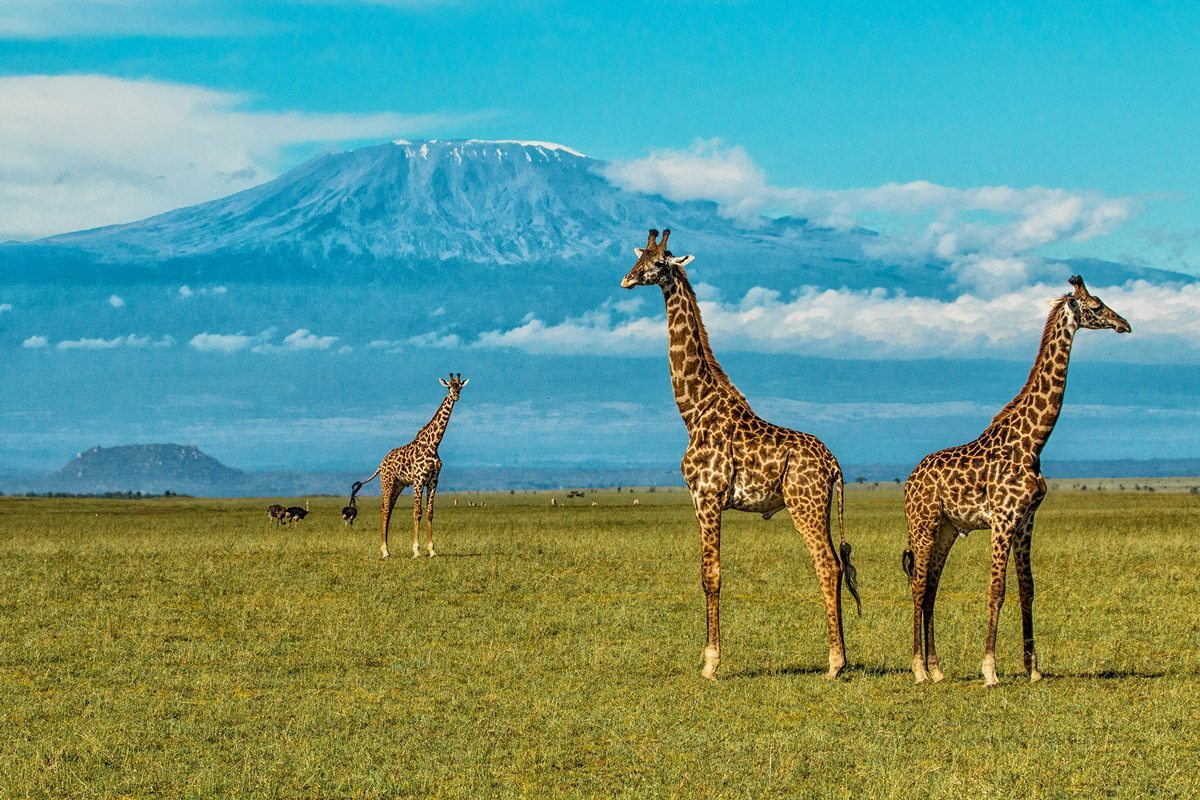
Any trip to the Kenyan bush is made better by the breath taking volcanic landscape of the Amboseli environment in Chyulu Hills. Riding a horse around the area as the Kilimanjaro is in the distance just adds to the memories you’ll take home.
Based on previous interactions and comfort level with the horses, riders and their mounts are carefully matched. The duration of rides in the morning and afternoon is two to three hours. The rides’ durations are suitable for the majority of riders, but youngsters and beginner riders might choose shorter tours. There aren’t many hotels that can also offer lessons in confines on their grounds. Every detail of your horseback safari is handled according to your preferences and requirements. You choose the ideal route for your long horseback safaris in Kenya, as well as the ride’s duration.
Beginner riders might enjoy a ride that lasts no longer than an hour, while intermediate and experienced riders could feel more at ease riding for up to half a day. One to ten days are possible for rides. Horseback riding safaris can be planned for parties of up to eight persons, families, or just two people. Certain limitations do apply. Riders must weigh at least 100 kg or less and be at least 12 years old.
Laikipia Plateau
One of Kenya’s best-kept secrets is the Laikipia Plateau, which spans from the snow-capped peaks of Mount Kenya to the edge of the Great Rift Valley. Here, in this combination of agribusiness and conservancies, are some of Kenya’s best conservation success stories. It’s possible to encounter endangered species like black rhinos, Grevy’s zebras, and wild dogs because of the large, open plains. With unusual activities like riding a horse through the wilderness or climbing Mount Kenya, this destination caters to the adventurous traveller.
Laikipia is surrounded by conservancies, ranches, and communal areas, and wildlife is free to roam all the way into Kenya’s northern rangelands. Due to the high levels of community involvement and participation, tourists enjoy unique opportunities to observe the culturally diverse cultures of the Mukogodo Masai, Samburu, and other peoples.
What is the best time for horseback riding safaris in Kenya
The type of horseback safari you can do in Kenya will depend on where you go and what time of year it is. Time is crucial for a Kenyan horseback safari. Even though the majority of parks and hunting grounds are accessible throughout the year, November and the wetter months of March through early May make it particularly challenging to visit some of the big parks. Additionally, one should limit their riding time during the rainy season because the terrain may get muddy. The sun might start to burn around 10 a.m. in the African summer, and temperatures won’t start to cool off until far into the evening.