
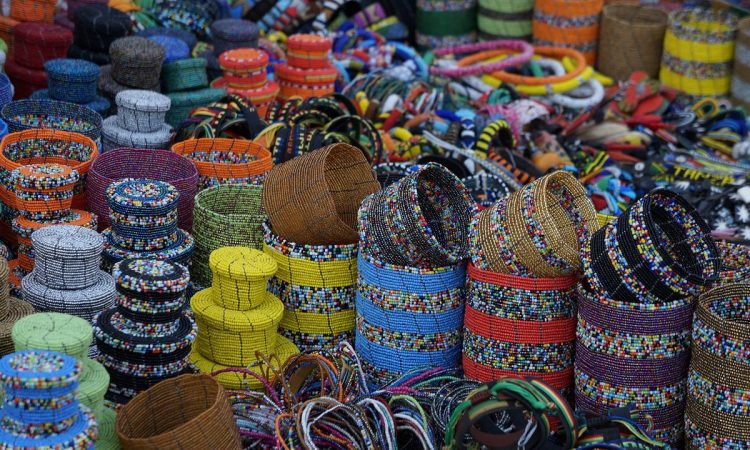
Maasai Market Nairobi
The Maasai Market in Nairobi
East Africa’s well-known Maasai market is located in Nairobi, the capital of Kenya (Maasai means “stream of cold waters”). The market, which features a wide variety of African artifacts, serves as a hub for regional tourism and population convergence.
Every Tuesday, the market is a hive of activity, with the gathered crowd expanding every minute. Taxi drivers profit from the large number of tourists that swarm the market in quest of “genuine” African trinkets to take back home.
The market attracts an overwhelming number of business activities centered around cultural artifacts, since people from various African cultural backgrounds in the area, along with those who have already lost their cultural identity and are known in Maasai as Ilashumpa Orook (black Europeans), frequent it.
The market is sometimes referred to as the “Maasai market,” which is odd considering that Kenya is a federation of over forty-five different communities. There are numerous schools of thought regarding why the Maasai, one of the most well-known and persistent ethnic groups in East Africa, are the inspiration behind the market’s name.
Maasai pastoralists have avoided western temptations ever since colonialists arrived in this area, and they have kept most, if not all, of their tribal mores. Since these pastoralists have kept their lands teeming with numerous plant species and large herds of wildlife, they have also helped to promote the region as a Kenyan safari destination. This has frequently been exploited to give East African republics a much-needed cultural identity.
Therefore, some argue that the Maasai name has come to be associated with culture and tourism, and that as a result, the tribe now feels as though they have been stripped of their setting. When visitors travel to Kenya and do not encounter a Maasai, it is believed that they have not fully experienced the Kenyan safari wilderness.
Plenty of Maasai live in Kitengela, a town that made headlines the previous year when the Maasai people there slaughtered lions that were trespassing into their area and attacking livestock from the Nairobi National Park.
On any given Tuesday, there are around 400 traders in the Maasai market, which today is almost unrelated to the Maasai people, yet there are typically only ten Maasai traders. The market is overrun with beadworks that look like theirs but aren’t quite as authentic.
It is indisputable that using the name of these pastoral peoples has been profitable, benefiting certain people, businesses, and the travel sector while subjecting the Maasai and their close relatives, the Samburu (Isampurr), to economic exploitation.

As a result, the Maasai women in the market frequently ricochet. We are an individualistic and proud people. Sadly, we have been a constant target since the colonial era, and now [other communities] utilise our name to promote commerce. We do not prey on other people’s possessions because we detest being parasitic,” laments Mashipei Sakau, a 38-year-old beadwork trader at the market.
In classic Maasai fashion, she continues, ‘Look around you, all these masquerades pretending to sell our beadwork cannot utter three words in Maasai, know nothing about the cultural significance of the various colors and patterns, and yet we claim to have a system in place to check some of these inequalities and parasitic robberies.
In Kenya, there are only about 400,000 Maasai people, a small number when compared to other communities. This may be the justification behind allowing outsiders to enter the market, according to Mopel, for the ruling class to appease the communities that make up the majority.
With the most depressing of outlooks, the overburdened Maasai look around today and see the barbaric trend encroaching on everything that was supposed to be in their people’s best interests. According to Mopel, this is unacceptable in a state that upholds the equal opportunity principle.
This well-educated pastoralist questions why the government does not patent these artifacts and cultures, arguing that “one of the core responsibilities of a government is to protect its citizens against any form of exploitation.”
Mopel fears that by taking its time implementing intellectual property rights, the government is wasting the Maasai people’s apparent riches of artistic talent and culture, and that failure to do so may have far-reaching social and political ramifications in the future and may be detrimental to the entire Kenyan community.
At this market, traditional vendors accuse the media once more, claiming that media outlets’ biases have caused them to fail the Maasai.
Tanzanian Maasai Joshua Lemunka accuses the media of morally repugnant injustice for failing to draw attention to this obvious abuse. He contends that the Maasai, who ought to have benefited from the mere use of their name to further marginalization, have instead been exposed by the media’s silence, which stands in sharp contrast to the latter’s role.
Joshua bemoans, “The media fails in its cardinal duty of exposing insidious exploitation, which is a violation of their rights, giving the Maasai very little coverage, if any, or simply coverage that is laden with negative innuendos. On the other hand, it has been influential in dismantling the former regime and bringing in a new one.”
This highlights the need to protect indigenous peoples’ rights as outlined in International Labour Organisation Convention 169, article 4.1, and to respect intellectual property rights. A provision of this convention specifies that special measures must be taken when necessary to protect the concerned peoples’ institutions, assets, labour, cultures, and environments.
Regretfully, Kenya has not yet ratified this convention, and the country’s current policies, which were mostly lopsided and intended to marginalize some communities while favoring others, were carried over from the colonial era, leaving glaring disparities in place. This stands in stark contrast to the Narc government’s stated goals of generating wealth and involving the local population in Kenya tourism.
The Maasai are known to be the first native Kenyans to sue the British government in 1913 over the revocation of a treaty they had signed, and ever since then, colonialism has treated them poorly. However, it points to the Maasai people’s commitment to justice and fair play.
The issue surrounding the Maasai market is one instance of how the state tasked with protecting indigenous peoples openly exploits them. The Maasai Market is the ideal location to shop for reasonably priced, exquisite, and vibrant mementos to bring back home. There is a wide range of merchandise available in this outdoor market, including African pots and pans, clothing, jewellery, shoes, and bags. Everything under the sun is available at the Maasai Market.
For those who travel for Kenyan safaris, it is one of the best experiences. Paintings, sketches, trinkets, clothing, and textiles with East African motifs are available to tourists. There are also wood carvings and handcrafted jewellery to choose from.
Bargaining
You should be conscious of how you speak, dress, and look because these aspects could influence how much you end up paying for the things you purchase, just like in any other Nairobi shopping area. Since they are not from Africa, some tourists are unable to avoid this; instead, they must bargain and pretend to know what they want.
You can purchase every memento you need in one sitting, but be ready to haggle a lot. Hold off until the market gets crowded if you wish to avoid attention. It’s also crucial to remember that excessive bargaining can harm the vendors, particularly if they are adamant about not lowering the price. In such cases, you should just give them the money they request to avoid ruining their business.
Opening hours
8 a.m. to 6 p.m. is when the market is open. But keep in mind that it travels throughout the city every day of the week.
Tuesday: It is now located on Kijabe Street, across from the Norfolk Hotel, in the Westgate Shopping Mall in Westlands (the upper parking lot).
Wednesday: Mombasa Road near the airport is home to Capital Centre.
Thursday: Ngong Road’s Nakumatt Junction Shopping Mall
Friday: Gigiri’s Village Market (the upper parking lot)
Saturday: The city center’s High Court parking lot (behind the Hilton)
Sunday: Yaya Centre in Hurlingham
Items found in the Market
Sandals
Most of the markets sell Maasai leather goods, including sandals with beads. Instead of making a snap purchase, take your time comparing various styles and costs at several different stores. Try them on before you buy them because different vendors may sell different sizes.
Jewellery
The majority of the markets feature jewellery, particularly local pieces. Really cool stuff, like beads and brass, is available. Typically, tourists purchase beaded bracelets in Kenya’s official colours. Keep in mind that a lot of the best artisans keep their finest creations hidden from view out of concern that rivals will steal them. Asking them if they have any more products besides the ones on display is acceptable.
Shukas
Maasai blankets are called shukas. Purchasing these gifts for your friends and family is worthwhile because the majority of recipients will find value in them. These are ideal for use on colder days or during picnics.
Kiondos
You can choose between the natural and striped, colourful versions of the woven carryall bags. For carrying everyday goods, they are ideal. In addition, the design is rather distinctive and the colours are stunning.
Artwork
Spend a modest amount of money on artwork that you want to place on your walls. If you have more money to spend, you should visit some of Nairobi’s art galleries, such as those at Kuona Trust and the Railway Museum. To give your house a little Kenyan flair, you may also buy a range of wooden carvings, bowls, and baskets.
For More information about gorilla trekking in Uganda, Rwanda gorilla safaris, and gorilla trekking in Congo while on Congo Safaris Tours. Don’t hesitate to contact us at Focus East Africa Tours.