

Top 7 Kenyan Tribes You Should Visit
Kenya is a hotspot for culture. It is a very rewarding destination to visit for a mind-blowing cultural safari. Kenya is culturally and ethnically diverse, with about 42 ethnic groups, each with its unique cultures, traditions, and norms.
Kenya’s community is divided into three linguistic groups/communities: the Nilotic, making up 30%; the Bantu, making up 67%; and Cushitic speakers. Other people who form part of the population of Kenya include Asians, Europeans, and Kenyan Arabs.
Among the ethnic groups in Kenya, the Bantu group is the largest ethnic group, comprising the Kikuyu, Akamba, Luhya, Kisii, Meru, and Mijikenda tribes. The Bantu people predominantly depend on farming both staple and cash crops, such as coffee and tea, for food and income.
The Nilotic is another ethnic group in Kenya consisting of the Maasai, Luo, Turkana, Samburu, and Kalenjin tribes. The Nilotic people are generally warriors and hunters, and visiting them will make your Kenya culture safari an amazing Kenya safari experience.
Kenya cultural safaris are very entertaining and memorable, and below are the top 7 tribes you must visit during your Kenya safari.
1. Kikuyu
Kikuyu is one of the most popular tribes and the largest tribe in Kenya, forming 22% of the Kenyan population. The Kikuyu people mostly inhabit the central region of Kenya. The Kikuyu belong to the Bantu ethnic group and are well known for being large-scale farmers growing cash crops such as tea and coffee. The Kikuyu people believe in and worship a deity named Ngai, who is believed to reside in Mount Kenya.
The Kikuyu tribe belongs to the northeastern Bantu branch, and they reside in the areas around Mount Kenya. The Kikuyu speak the Gikuyu language, which is closely related to those of the Embu and Mbeere. They also speak Kiswahili and English.
Socially, Kikuyu men have overall power in the community over women, and culturally, they are allowed to marry more than one woman as long as they can meet their needs. Culturally, the Kikuyu people value the practice of paying bride price. The Kikuyu people are spread across the urban areas of Kenya, and they have retained their culture and traditions regardless.
2. Luhya
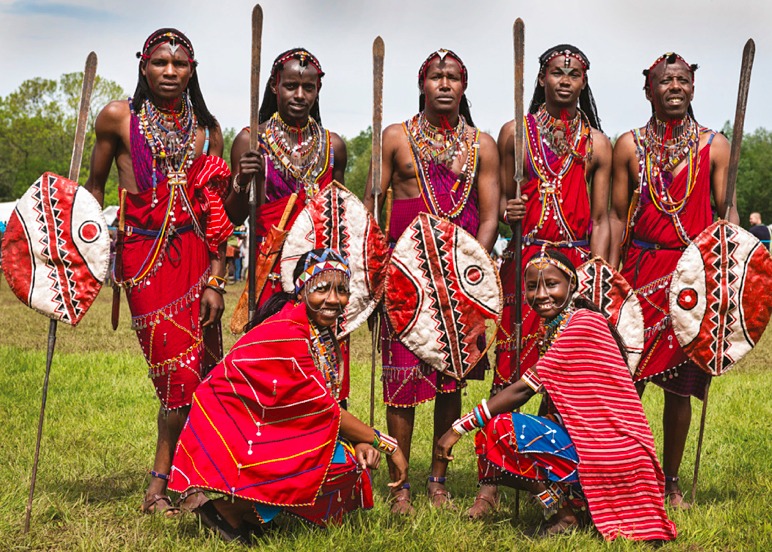 The Luhya are the second largest tribe in Kenya, making up 14% of Kenya’s population. The Luhya are also known as Abaluyia or Luyia. The Luyia tribe is a group of 19 distinct Bantu tribes, and their respective languages are collectively known as Luhya languages. Some of the tribes making up the Luhya tribe include Bukusu, Idakho, Isukha, Kabras, Khayo, Kisa, Marachi, Maragoli, Marama, Nyala, Nyole, Samia, Tachoni, Wanga, and Batura.
The Luhya people reside in the western region of Kenya, which is fertile. These people religiously believe in the traditional god “Nyasaye” or Were Khakaba. Male circumcision is one of the important practices among the Luhya tribes as a way of initiating boys into adulthood. This ceremony is very entertaining to engage in while on a Kenya cultural safari. Another fascinating aspect of the Luhya is bull-fighting and Ugali, a popular traditional food.
3. Kisii
The Kisii tribe is the 7th largest tribe in Kenya, making up 6% of Kenya’s population. The Kisii are also known as the Abagusi, Mkisii, Gusi, or Wakisii in Swahili. The Kisii are an East African ethnic group originating from the pre-Bantu agropastoralists inhabiting the former Nyanza and Rift Valley provinces of Kenya.
Kisii people live in very large and close families, sharing most of their day-to-day activities, such as cooking and farming, as per social and marriage settings. Men hold more authority than women, and they are allowed to have more than one wife.
The Kisii tribe used to carry out female circumcision until the practice was outlawed by the government of Kenya, though it is still practiced in some parts. Male circumcision is still practiced as a way of initiating boys into adulthood.
Kisii people generally carry out farming; they grow bananas, known as “matoke,” on a large scale. The Kisii religiously believe in the supreme god “Engoro” and other ancestral spirits. The Kisii people are culturally known for soapstone carving, basketry, and pottery.
4. Mijikenda
Mijikenda is a group of nine sub-tribes belonging to the Bantu tribe and inhabiting the coast of Kenya between the Sabaki and Umba rivers. Mijikenda’s sub-tribes include Giriana, Digo, Chonyi, Duruma, Jibana, Kambe, Kauma, Rabai, and Ribe.
In Kenya, the Mijikenda tribe is about 1,960,574 people residing in the coastal region of Kenya. The Mijikenda tribe’s culture revolves around clans and age-sets. The Mijikenda tribe is considered one of the most significant tribes in Kenya, responsible for giving birth to the Swahili culture.
Clans in the Mijikenda tribe are comprised of several families sharing a patriarchal ancestor, and each clan has its own sacred place called Kaya. The Kaya is a shared space for conducting religious rituals such as prayers and sacrifices, among others.
The Mijikenda people are considered to be some of the best cooks in Kenya, most especially the Digos. The staple food of the Mijikenda tribe is wali, a dish prepared with rice and coconut. Other Mijikenda dishes include fish and other seafood, and it is practically referred to as Mijikenda cuisine.
5. Maasai
The Maasai tribe is the most popular in Kenya, widely famous for its unique culture and history. The Maasai belong to the Nilotic ethnic group inhabiting the northern, central, and southern regions of Kenya. The Maasai inhabit areas near most of Kenya’s protected areas (national parks and reserves), such as the Maasai Mara National Reserve. Because of their residence, they are easily visited during your wildlife Kenya tours.
The Maasai tribe is relatively small in size, estimated to be around 841,622 people in Kenya. These people are part of the Nilotic language family, speaking the Maa language. The Maasai people are famously known for their unique culture, dressing in red-striped Shukas adorned with beautiful locally made ornaments such as colorful necklaces, traditional regalia, and the bomas.
The Maasai are semi-nomadic people depending on livestock rearing, and culturally, the more cattle a Maasai has, the richer he is considered. The Maasai people religiously believe in their supreme god, “Enkai”. The Maasai people live in large communities, a “hub” consisting of ten to 13 tiny circular thatched huts referred to as bomas. These huts are enclosed by a fence or bushes with sharp thorns, locally known as Enkang.
The Maasai people are famously known for their height and being warriors. The Maasai men go through a critical ritual referred to as “Moran,” which is a passage for Maasai men who live for a certain period in isolation, learning tribal customs and developing courage and endurance to become warriors.
6. Luo
The Luo tribe and its people are one of the largest tribes in Kenya, making up to 13% of the total population of Kenya. The Luo people are related to Nilotic ethnic groups inhabiting areas of South Sudan, Ethiopia, Northern Uganda, western Kenya, Eastern Congo, and the Mara region of Tanzania.
Specifically, the Luo people in Kenya inhabit the western/Nyanza region, and the Luo tribe is ranked as the 4th largest ethnic group in Kenya after the Kikuyu, Luhya, and Kalenjin. The Luo in Kenya call themselves “JOLUO,” also known as “JALUO,” meaning the people of Luo; the Luo speak the Dholuo language.
Traditionally, the Luo are fishermen, depending on fishing as their main economic activity. Because of their activity, the Luo have a saying that “without fish, no Luo is complete.”
Traditionally, the Luo have a teeth-removing and circumcision ceremony that initiates Luo boys into manhood. During the circumcision ceremony, the six lower teeth of boys are removed as a way of distinguishing Luo men from others. The most unique and fascinating aspect about the Luo is that they are professional mourners; they are famously known for being hired as professional mourners to mourn for others.
The Luo people are known for having a reputation for bragging and flossing.
7. Kalenjin
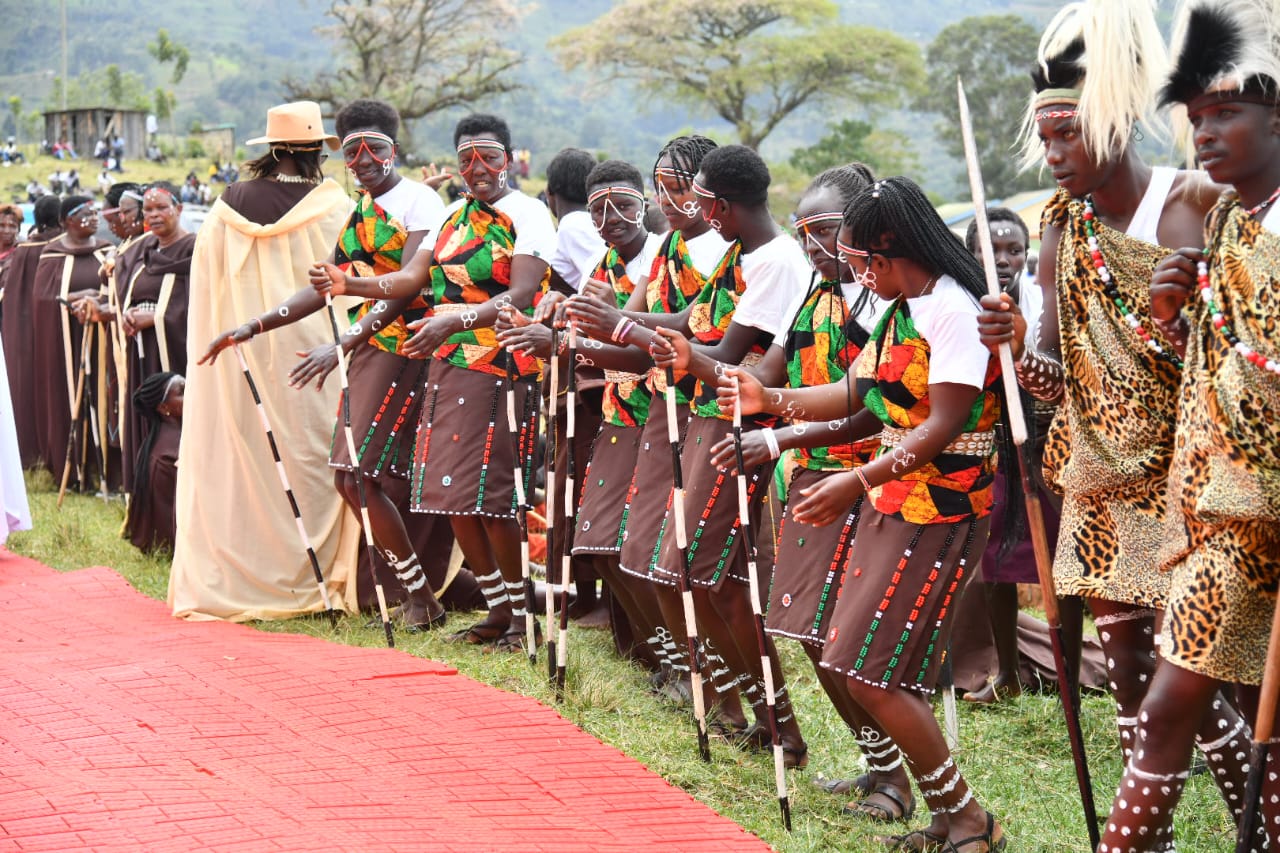 The Kalenjin tribe is the 3rd most popular ethnic group in Kenya, making up to 12% of the Kenyan population. This ethnic group is a very amazing group to visit, offering a fascinating cultural retreat during a Kenya cultural safari.
The Kalenjin ethnic group is a group of Southern Nilotic people who are indigenous to East Africa, and the whole tribe is made up of 11 culturally and linguistically related tribes, namely Kipsigis, Nandi, Tugen, Keiyo, Marakwet, Pokot, Sabaot, Sengwer, Lembus, Ogik, and Terik. All these 11 tribes/groups speak Kalenjin languages belonging to the Nilotic language family.
The Kalenjin people are very social people living together in round thatched huts, which are constructed using bent saplings and a mixture of mud and cow dung. The Kalenjin people are subsistence farmers depending on the cultivation of grains such as maize, wheat, sorghum, and millet. To a smaller extent, they also rear animals such as cows, goats, and sheep for beef and milk.
Traditionally, the Kalenjin tribe carries out an initiation “circumcision” process, which is a key component of the Kalenjin identity, most especially among males. The circumcision initiation signifies the transition of Kalenjin males from boyhood to manhood. This process occurs during a boy’s pre-teen/early teenage years, and he can participate in it during your Kenya cultural safari.
The Kalenjin people have a monotheistic belief, and they worship a deity called “Asis,” which signifies the sun. The Kalenjin people are famously known as the running tribe because of their athletic superiority, and this has been witnessed as many Kalenjin people winning in some of the international marathons.
As you can see, the diversity of the tribes in Kenya sometimes leads to clashes between the major groups; however, the cultural wealth offered to the country by these tribes is rich and forms an integral part of the Kenyan and African identity. To explore the culture at this place, you can book a Kenya holiday package that lets you explore its rich tribal culture. Or check out more of our Kenya travel packages that can be combined with Wildlife Safaris in Kenya.