

Location of Masai Mara National Park: Where Is Masai Mara?
The location of Masai Mara National Park is in southwestern Kenya, in the county of Narok along the Great Rift Valley. It is close to the Kenya-Tanzania border. The park is officially known as Masai Mara National Reserve and it is approximately 224 kilometres southwest of Nairobi, which is the capital city of Kenya.
The Masai Mara borders Tanzania’s famous Serengeti National Park to the south and forms part of the wider Mara-Serengeti ecosystem. Its location makes it one of Kenya’s most important wildlife safari destinations and a popular choice for safari-goers.
If you are searching for the Masai Mara location, the simple answer is: Masai Mara National Reserve is in Narok County, southwestern Kenya, close to the Tanzania border and approximately 224 kilometres from Nairobi.
Where Is Masai Mara Located?
The Masai Mara is in southwestern Kenya, within Narok County and along the Great Rift Valley. The reserve is found within a short distance from Narok Town and extends toward the Kenya–Tanzania border.
Masai Mara is in Kenya, not Tanzania. Tanzania’s Serengeti National Park connects to the south. Although they are located in different countries and they are separate protected areas, the Masai Mara and Serengeti form part of the larger Mara-Serengeti ecosystem because the boundaries are only administrative.
The reserve covers approximately 1,510 square kilometres and is characterized by open savannah grasslands, acacia trees, rivers, and different wildlife habitats.
Masai Mara Location at a Glance
| Location details | Information |
|---|---|
| Country | Kenya |
| County | Narok County |
| Region | Southwestern Kenya |
| Geographic region | Great Rift Valley |
| Nearest major town | Narok Town |
| Distance from Nairobi | Approximately 224 km |
| Southern boundary | Tanzania and the Serengeti ecosystem |
| Main ecosystem | Mara-Serengeti ecosystem |
| Area | Approximately 1,510 km² |
Where Is Masai Mara National Reserve on the Map?
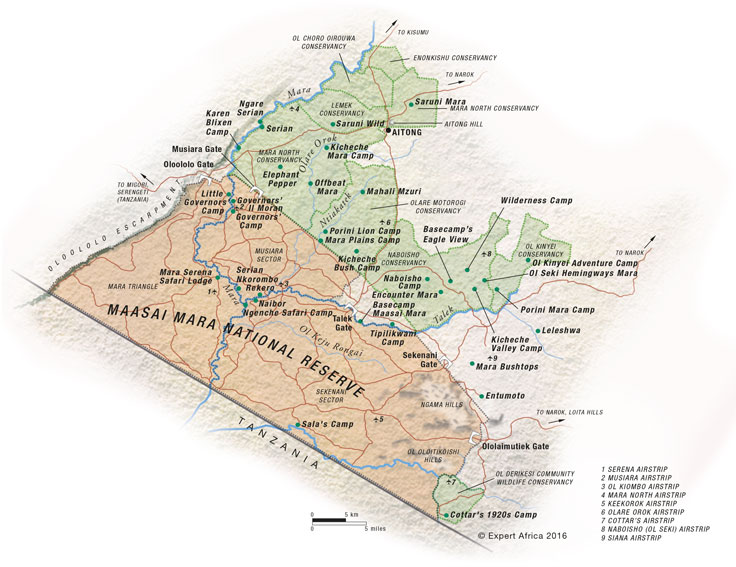 On a map of Kenya, Masai Mara National Reserve is found in the southwestern corner of the country, southwest of Nairobi and close to the Tanzanian border.
The reserve’s southern boundary adjoins the Serengeti ecosystem, while the surrounding landscape includes Maasai community ranches, conservancies and the Great Rift Valley escarpments.
The Masai Mara is drained by three important rivers, and these are:
- Mara River
- Sand River
- Talek River
These rivers and the surrounding open grasslands provide important water and grazing resources for the wildlife that lives in and moves through the Masai Mara.
For a more detailed geographical view, see our Map of Masai Mara National Reserve.
Masai Mara Location in Relation to Nairobi
One of the advantages of the location of Masai Mara National Park is its relatively close proximity to Nairobi.
The reserve is approximately 224 kilometres from Nairobi by road. The journey generally takes around 6 to 7 hours, depending on the route, road conditions, weather and the location of your accommodation or park gate.
The road journey from Nairobi passes through the Great Rift Valley and Narok Town before continuing toward the reserve. The section between Nairobi and Narok is generally easier to travel, while roads closer to the reserve can be rough and bumpy, particularly during periods of heavy rain.
The journey also provides an opportunity to enjoy views of the Great Rift Valley and the rural landscapes of southern Kenya.
How to Get to Masai Mara
The Masai Mara can be reached by road or air.
Getting to Masai Mara by Road
Driving is one of the most common ways to reach the reserve from Nairobi.
The journey is approximately 224 kilometres and normally takes about 6 to 7 hours. Safari travellers generally use a private or shared safari vehicle with an experienced driver-guide.
Most road journeys pass through Narok Town before continuing toward the reserve. Roads closer to the Masai Mara can be dusty, rough and affected by potholes, especially during the rainy season.
Your choice of park gate and accommodation is important because the Masai Mara is a large reserve and different areas can be more conveniently accessed from different routes.
For more information, read our guide to how to get to Masai Mara.
Getting to Masai Mara by Air
Flying is the quickest way to reach the Masai Mara from Nairobi.
Domestic flights operate from Nairobi, including departures from Wilson Airport, with flight times of approximately 45 minutes. Several airstrips serve different parts of the reserve and surrounding safari properties.
Some of the airstrips serving the Masai Mara area include:
- Shikar Airstrip
- Masai Mara Serena Airstrip
- Kichwa Tembo Airstrip
- Siana Springs Airstrip
Your chosen camp or lodge will normally determine the most convenient airstrip to use.
Masai Mara’s Location and the Tanzania Border
The Masai Mara location is especially significant because the reserve lies next to Tanzania’s Serengeti ecosystem.
The Masai Mara and Serengeti are separate protected areas in different countries, but they form part of the same wider ecological system. Wildlife moves across this broader landscape, making the Kenya–Tanzania border particularly important for conservation and the annual wildebeest migration.
You can learn more about this neighbouring ecosystem in our guides to Serengeti National Park and Masai Mara and Serengeti Safaris.
What Borders Masai Mara National Reserve?
The geographical setting of the Masai Mara can be understood through its major neighbouring features.
- South: Serengeti National Park and Tanzania
- West: Siria (Esoit) Escarpment and the Mara Triangle area
- North: Maasai community ranches and conservancies
- East: Great Rift Valley landscapes and surrounding community areas
This position gives the Masai Mara its distinctive combination of open plains, escarpments, rivers and wildlife habitats.
Mara Triangle Location
The Mara Triangle occupies the northwestern part of the Masai Mara National Reserve and is separated from other sections of the reserve by the Mara River.
The area covers approximately 510 square kilometres and is known for its scenic landscapes, abundant wildlife and, in some areas, lower visitor density.
The Mara Triangle is managed by the Mara Conservancy and has access to airstrips including Serena and Kichwa Tembo.
Read more about the Mara Triangle before deciding where to stay or which part of the reserve to visit.
Why the Location of Masai Mara Is Important
The location of Masai Mara National Park is one of the main reasons the destination has such exceptional wildlife viewing.
Its position provides several important ecological advantages:
- It is part of the Mara-Serengeti ecosystem.
- It borders Tanzania’s Serengeti ecosystem.
- The Mara River provides an important water source for wildlife.
- Open savannah grasslands support large numbers of herbivores.
- Surrounding conservancies and community lands provide additional wildlife habitat.
- The reserve lies within the route of the annual wildebeest migration.
The combination of these geographical features allows the Masai Mara to support both resident wildlife and seasonal migratory herds.
Masai Mara Location and the Wildebeest Migration

The Masai Mara’s position next to the Serengeti is particularly important during the wildebeest migration.
Large herds of wildebeest, zebra and other grazing animals move through the Mara-Serengeti ecosystem according to rainfall, food and water availability. During the migration season, the Mara River can become a major wildlife crossing point.
However, wildlife movement is seasonal and unpredictable. There is no single location or date that guarantees a river crossing.
Read our guide to the Wildebeest Migration to learn more about this spectacular natural event.
Masai Mara Location and Nearby Safari Destinations
The Masai Mara is conveniently positioned for combining a safari with other destinations in Kenya.
Because of its location in southwestern Kenya, it is easy to combine a Masai Mara safari with destinations such as Lake Nakuru and Naivasha. The reserve’s proximity to Tanzania also makes it possible to create longer Kenya–Tanzania itineraries that include the Serengeti.
For example, travellers can combine the Masai Mara with Lake Nakuru, or continue into Tanzania on a Tanzania Serengeti Safari.
Brief History of Masai Mara National Reserve
The Masai Mara was initially established as a wildlife sanctuary in 1961, covering approximately 520 square kilometres. It later became a national reserve in 1974, and its area was subsequently expanded to approximately 1,510 square kilometres.
The name “Mara” is associated with the Maa language and is commonly interpreted in reference to the area’s characteristic spotted or dotted landscape created by trees and shadows across the plains.
The reserve has historically been managed through local authorities, while the Mara Triangle has its own management arrangement through the Mara Conservancy.
Is Masai Mara a National Park?
The name Masai Mara National Park is commonly used by travellers when searching for the destination, but the official designation is Masai Mara National Reserve.
This distinction is useful when planning a safari because a national reserve is managed differently from many of Kenya’s national parks.
For search purposes, you may see the destination referred to as “Masai Mara National Park,” “Masai Mara Game Reserve” or simply “Masai Mara.” These terms generally refer to the same famous wildlife destination in southwestern Kenya, although Masai Mara National Reserve is the correct official name.
Plan Your Masai Mara Safari
Understanding the Masai Mara location makes it easier to choose your route, accommodation, park gate and transportation.
Whether you travel from Nairobi by road or fly directly to a nearby airstrip, the Masai Mara’s location in southwestern Kenya places you at the heart of the Mara-Serengeti ecosystem and one of Africa’s most remarkable wildlife destinations.
Explore our other guides to learn more about Masai Mara safaris and where to stay in the Masai Mara